Every Home Energy Rating for an existing home comes out of one piece of software: AccuRate Enterprise, developed by CSIRO. Knowing what the tool does with your data makes it clearer what you need to capture on site, and why small capture mistakes turn into rework.
What AccuRate Enterprise is
NatHERS, the Nationwide House Energy Rating Scheme, describes AccuRate Enterprise as the first-generation benchmark tool for Home Energy Rating of existing homes. Two points matter for assessors:
- It is the only way to produce an existing homes certificate. Certificates for existing homes can only be generated in AccuRate Enterprise, in its existing homes mode.
- It shares its engine with new homes. AccuRate Enterprise uses CSIRO's Chenath calculation engine, the same engine behind the new-home tools (Hero, FirstRate5, BERS Pro and AccuRate Home). The existing homes mode adjusts some assumptions and data fields for homes that are already built.
What the rating produces
An existing homes certificate carries more than a star rating:
| Output | What it tells the household |
|---|---|
| Star Rating (out of 10) | How well the building shell keeps the home comfortable: its heating and cooling needs |
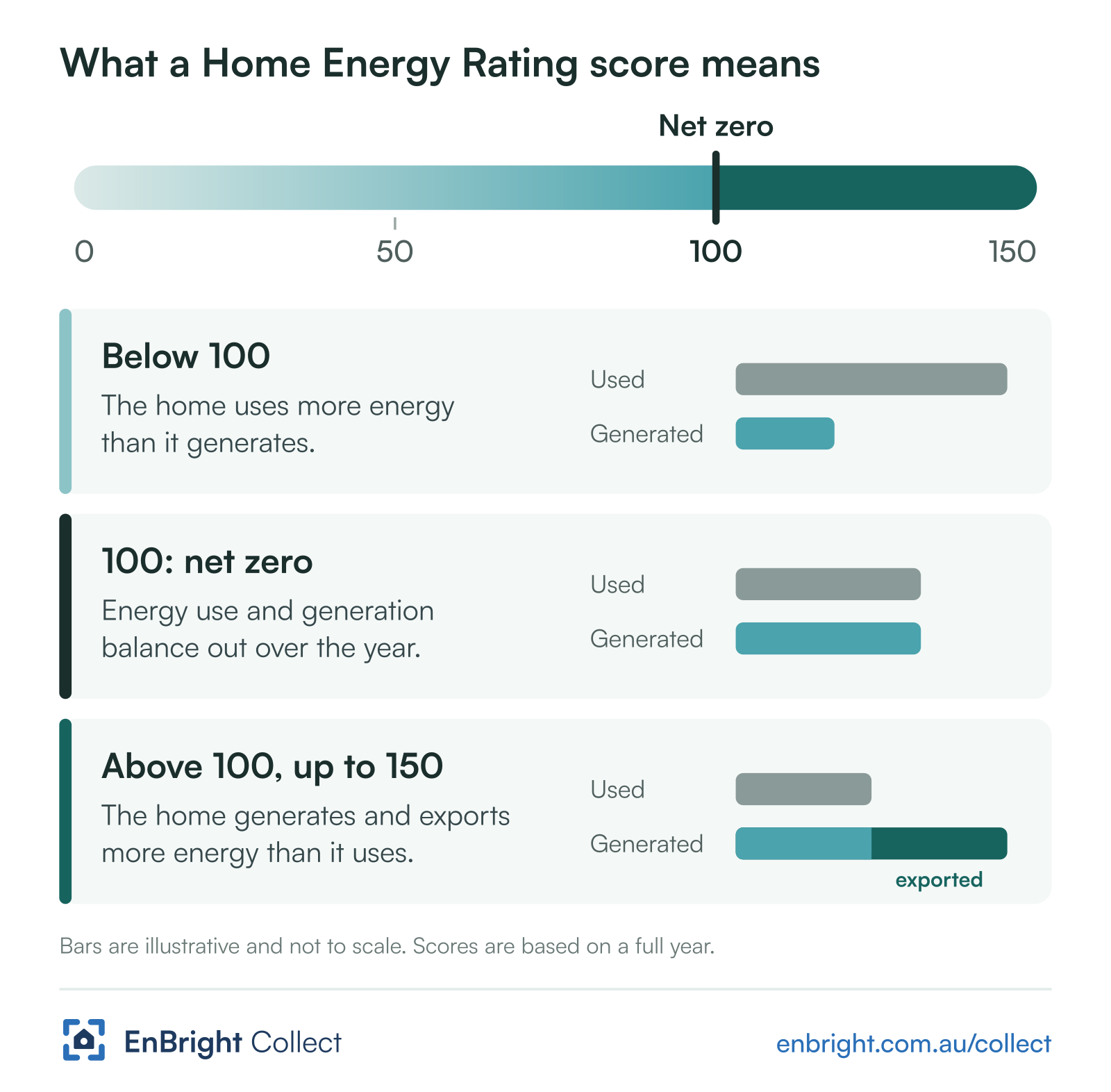
| Home Energy Rating (0 to 100+) | The home's overall energy performance, including its appliances. Ratings above 100, up to a maximum of 150, are possible |
| Estimated energy use and emissions | What the home is likely to use in a year |
| Appliance performance and renewables | How the heating, cooling, hot water and any rooftop solar contribute |
| Upgrade advice | A second page with suggested improvements |
For a sense of where existing homes sit today, the 1,056 homes assessed in the national trial averaged a Star Rating of 3.96 and a Home Energy Rating of 54.19, according to figures NatHERS presented in November 2026.
What drives the Star Rating and Home Energy Rating
NatHERS lists the factors the Star Rating analyses: climate zone, orientation, insulation, shading, window types, building materials and air leakage. Chenath works out the home's heating and cooling energy loads from those inputs, for the home's location in one of the 69 NatHERS climate zones.
The Home Energy Rating starts from that same building shell and adds what runs inside it. NatHERS says it considers the efficiency of fixed appliances, such as air conditioning units, heaters, hot water systems, pool and spa pumps, and lighting, along with any onsite solar panels and batteries, and the local climate. Those inputs are combined to estimate the home's annual energy use. A score of 100 means the home is net zero: its energy use and generation balance out over the year. A home scores above 100 when it generates and exports more energy than it uses.
Every one of the factors behind both ratings comes from the site visit. The software can only rate the home that the capture describes.
Where capture goes wrong
Because the rating is calculated from what you record, most rework traces back to the visit:
- Geometry that doesn't fit: a window wider than the wall it sits in is rejected by AccuRate, so the job comes back to you.
- Orientation: north on the plan drives how much sun every window gets. A plan that is a few degrees out changes the result.
- Unverified insulation: when insulation can't be verified, the NatHERS Technical Note sets the default to use. Wall insulation needs documentary evidence even when you can see it. The client must understand that defaults represent the worst case and may lower the rating.
- Missing evidence: accredited capture tools must collect photographic evidence, and auditors look for it. Example: a low-e glazing claim needs an invoice or specification behind it.
What's changing
Software for existing homes is accredited today under the NatHERS User Interface Protocol (UIP) for existing homes, while software for new homes sits under a separate Software Accreditation Protocol. In November 2026 NatHERS opened a consultation on a single Home Energy Rating Software Protocol for New and Existing Homes, which would put both under one framework covering governance, technical, privacy, security, audit and operational requirements. Submissions close on 21 December 2026.
Third-party tools are being developed that will let assessors complete existing homes assessments end to end. Each tool connects to AccuRate Enterprise as its calculation engine, under the NatHERS for Existing Homes User Interface Protocol (UIP). NatHERS reports that four developers are making progress, with the tools expected to be tested against the UIP over the course of the year. Read the update.
How EnBright Collect fits
EnBright Collect is a capture tool, not a calculation engine. We are currently undergoing accreditation with NatHERS to make EnBright Collect an accredited tool for the Home Energy Rating for existing homes.* EnBright Collect structures the site visit around what AccuRate Enterprise needs, exports a file to AccuRate Enterprise directly and receives the Home Energy Rating from AccuRate Enterprise. You do not have to use AccuRate Enterprise yourself: you can go end to end in EnBright Collect, from scheduling the assessment to issuing the Home Energy Rating and certificate.
EnBright Collect also has several features that streamline existing homes assessments, including LiDAR floor plans that measure a room in about 60 seconds, address details pre-filled before you arrive, appliance nameplates read from a photo, capture that works offline, and over 120 built-in rules that check your work before you leave the house. See all EnBright Collect features.
Learn more about EnBright Collect.
*Software accreditation is being sought. Our Expression of Interest is lodged with the NatHERS Administrator, subject to its assessment process.
Sources (read 18 and 19 November 2026): NatHERS data collector training and accreditation industry webinar (19 November 2026), for the trial averages; AccuRate Enterprise for existing homes; Understanding your certificate; Measuring energy efficiency in existing homes; Software accreditation requirements; Software consultation; UIP development continues to gain pace; Existing homes user interface tools.
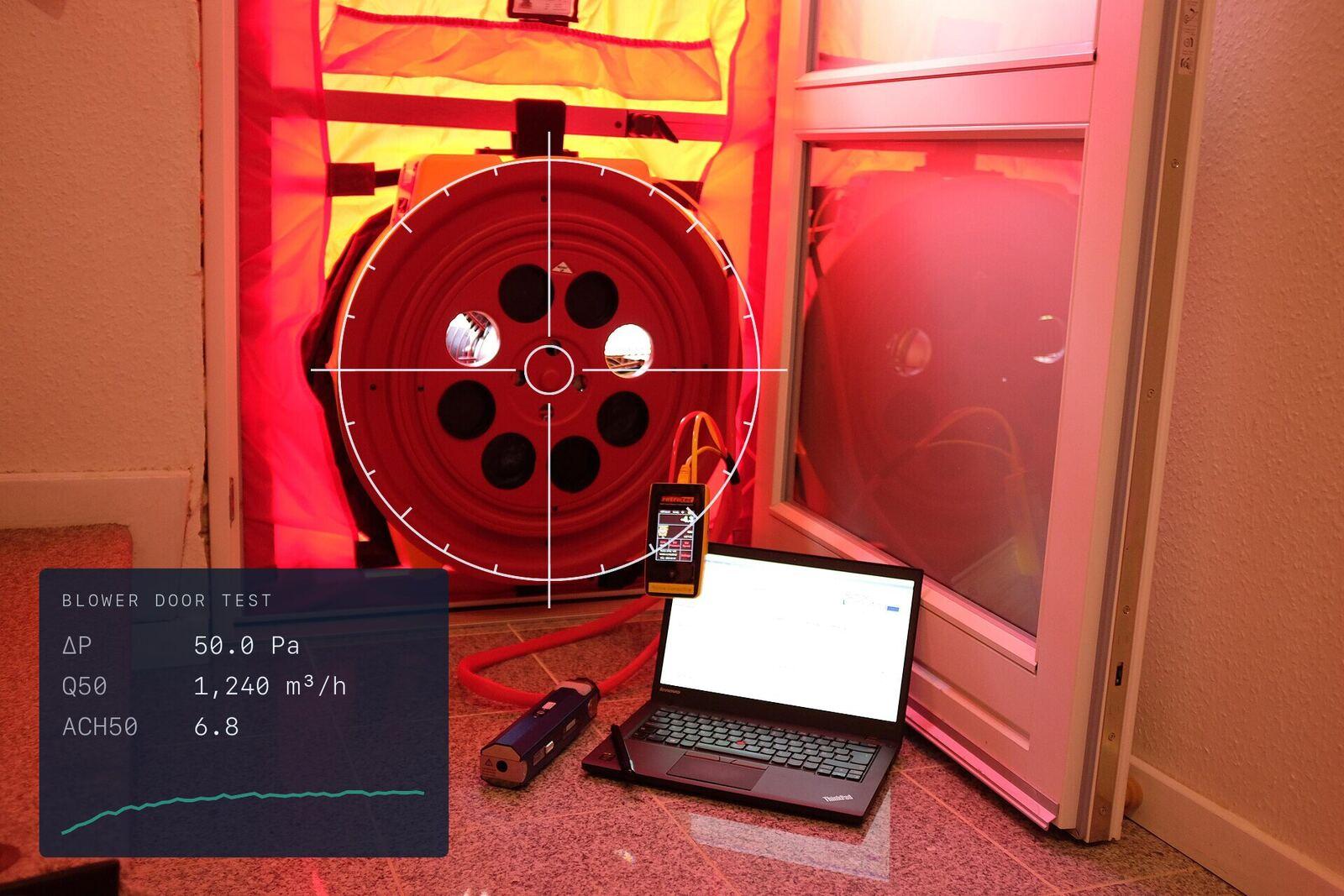
Cover photo: Blower door 2 by BoRohde, CC BY-SA 4.0, via Wikimedia Commons, cropped and annotated by EnBright. This annotated version is shared under the same licence.
